How to Ride a Korean City Bus
Buses reach the places the subway does not, and visitors avoid them for one reason: nobody explains the tap-off rule. Here is the whole procedure.
Reality check
- English menu
- None
- Payment
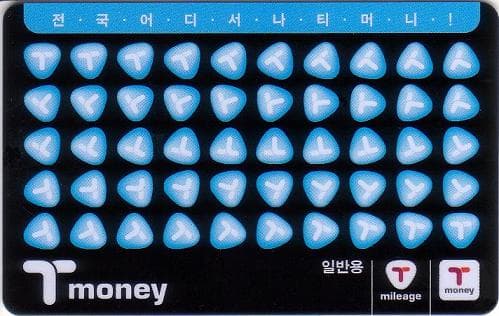
- Card accepted — a transit card is close to mandatory; cash works but costs more and earns no transfer discount
Plenty of visitors ride the subway for a week and never once get on a bus, which is a shame, because the bus goes where the subway skips — up hills, along the river, into the neighbourhoods that are worth the trip. The only thing standing in the way is a rule nobody tells you, and getting it wrong is what makes people give up.
Tap your card when you get off. Every time.
You tap on when boarding, and you tap again on the reader by the door when you get off. Miss the second tap and the system cannot tell where your journey ended, so you are charged as though you rode to the end of the line and your free transfer to the next bus or subway is lost. This is the single reason visitors decide buses are not worth the trouble.
The whole procedure
- 1
Find the stop and the number
Bus stops list the routes that serve them, and most have a display counting down the next arrivals. Route numbers are Arabic numerals, so this part needs no Korean at all.
- 2
Put your hand out
Buses do not automatically stop for people standing at a stop, particularly where several routes share it. Make it obvious you want this one. Drivers pull past people who look like they are waiting for something else.
- 3
Board at the front and tap on
The reader is beside the driver. One beep and you are on. Hold on immediately — city buses pull away briskly and the driver will not wait for you to sit down.
- 4
Press the bell before your stop
Red buttons on the poles and beside the windows. Press once, a stop or so ahead. If nobody presses and nobody is waiting outside, the bus does not stop.
- 5
Leave by the rear door and tap off
There is a second reader by the rear door. Tap it. This is the step that matters.
What the colours mean
In Seoul, buses are colour-coded by the kind of route they run. Other cities use their own schemes, but the idea is the same and the colours are a reasonable guess elsewhere.
| Colour | What it is | Use it for |
|---|---|---|
| Blue | Trunk routes across the city | Longer journeys between districts |
| Green | Branch routes feeding the subway | The last stretch to somewhere the subway misses |
| Yellow | Short circular routes in the centre | Getting around one district |
| Red | Wide-area routes out to the suburbs | Reaching Gyeonggi towns; costs more |
The transfer discount
Bus and subway are one fare system. Within a window of roughly half an hour from tapping off, your next tap on counts as a transfer rather than a new journey, so you are not charged a second base fare — you pay by total distance instead. It works between buses and the subway in either direction, and it is why a two-leg journey costs barely more than a one-leg one.
- It only works with a transit card. Cash fares get no transfer at all.
- It only works if you tapped off. The rule above, again, because this is where it is lost.
- Longer journeys add a small distance charge beyond the first stretch. A matter of a few hundred won, not a different fare.
Which app to hold
Use Naver Map or Kakao Map, not Google Maps — Google is missing most transit routing inside Korea. The Korean apps show live bus positions and how many stops remain, which is the difference between confidently riding a bus and anxiously watching out of the window.
Announcements are in Korean and English
City buses announce each stop in both, but the English announcement is short and easy to miss over engine noise. Watching the stop counter in the map app is more reliable than listening for it.
+Can I pay with cash?
On most city buses, yes, into a box beside the driver, and drivers rarely give change. It costs more than the card fare and voids the transfer discount. Get a card.
+What happens if I forget to tap off?
You are charged for the whole route and your next leg starts again from the base fare. Nothing worse than that — no fine, no barrier. It just quietly costs you money.
+Are buses harder than the subway?
Slightly, and only until you have done one. They are also often faster over short distances, because the subway makes you walk down and back up.
+Do buses run all night?
Seoul runs a small network of night buses after the subway stops. They are infrequent and follow their own routes rather than the daytime ones.
Read next
T-money or Climate Card? Most Visitors Should Buy the Boring One
Seoul sells several transit passes and the cheapest-looking one has a rule that strands you at the airport. Here is the arithmetic, and which card actually fits your trip.
Google Maps Still Cannot Navigate Korea — What Changed in 2026, and What to Install
Korea approved Google's map export in February 2026, ending a 19-year dispute. Turn-by-turn navigation still is not live. Here is what works today and the two apps that do.