KTX vs SRT: The Answer Changed in September 2026
SRT no longer exists. It was merged into Korail on 1 September 2026, fares came down about ten per cent, and the two booking apps became one. Here is what that changes.
Reality check
- Booking
- English accepted — one booking channel now covers every high-speed train, including departures from Suseo
- Payment
- Card accepted — foreign cards are still rejected by the Korean payment gateway more often than they should be
If you are reading an English guide that tells you to compare KTX prices against SRT prices, it was written before September 2026 and the advice no longer applies. This is one of the most out-of-date pieces of information in English-language Korea travel writing right now, and it is worth two minutes of your time because it decides which app you install.
What happened on 1 September 2026
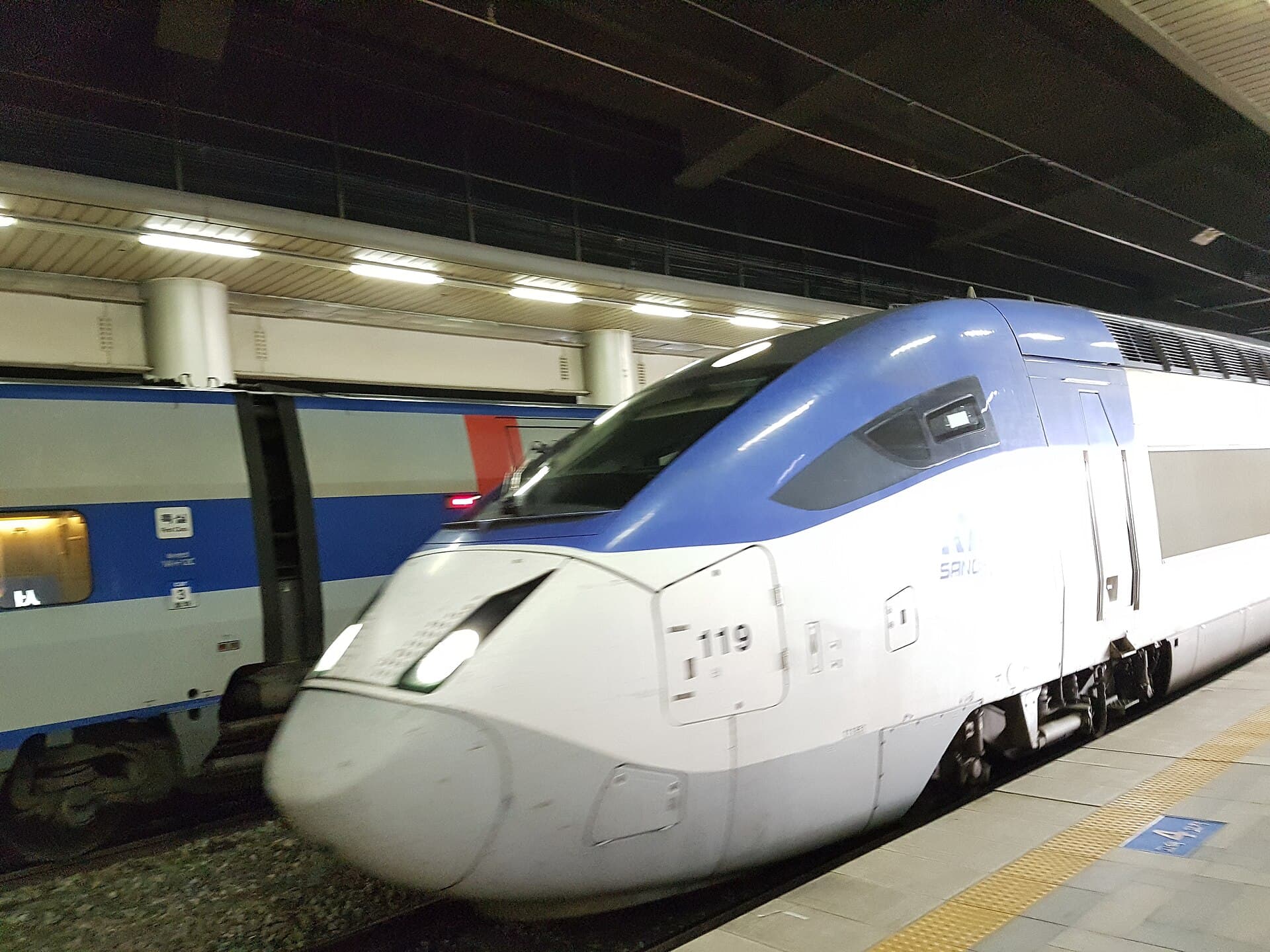
Korea ran two competing high-speed operators for a decade: Korail, which ran KTX out of Seoul Station, and SR, which ran SRT out of Suseo. On 1 September 2026 SR was absorbed into Korail. The SRT name is gone, its trains now run under the KTX name, and there is one operator, one app and one fare table.
What actually changed
| Before | Now | |
|---|---|---|
| Operators | Korail and SR | Korail only |
| Train brands | KTX and SRT | KTX |
| Booking | Two sites, two apps, two accounts | One app, one account |
| Fares | SRT undercut KTX on the same route | One fare table, around a tenth below the old KTX price |
| Which train from which station | Fixed by operator | One shared fleet, so a train can leave from either |
What did not change
The stations. This is the part people get wrong, because “the operators merged” sounds like everything became one place. It did not. Seoul still has separate high-speed departure points and they are nowhere near each other:
- Seoul Station — the central one, on subway lines 1 and 4 and the airport line. Most visitors are staying within reach of it.
- Suseo — in the south-east of the city, on line 3 and the Suin-Bundang line. Convenient if you are staying around Gangnam, a long ride from anywhere else.
- Yongsan — mainly the south-western routes toward Jeolla.
Read the station, not the train name
Now that one fleet serves every route, the train name tells you nothing about where it departs from. Your ticket names a station. That is the only thing on it that decides where you need to be.
So which do I book?
You no longer choose. Search your route and you get every high-speed departure from every station in one list, then pick on time and price as you would anywhere else. If two departures suit you equally, take the one from the station you can reach most easily — that is now the only meaningful difference between them.
The rail pass question
The KORAIL PASS, sold only to foreign visitors, has always excluded SRT trains. Logically that exclusion should lapse now that SRT has stopped existing. Korail’s English pages tend to be slower to update than the Korean ones, so the old wording may still be sitting there when you read it.
Do not assume the pass covers Suseo departures
If your plan depends on boarding a train at Suseo with a rail pass, confirm it at a station ticket office before you rely on it. Being turned away at the gate on the morning of a long journey is an expensive way to find out. For a single return trip the pass rarely pays for itself anyway, and less so now that fares have fallen.
+I have unused tickets bought before the merger. Are they void?
No. Tickets bought before the merger remain valid for travel. If a booking will not show up in the app, a station ticket office can look it up from your passport number.
+Is the old SRT app still worth keeping?
No. Booking moved into Korail’s unified app. Keep the one you already used for KTX and update it.
+Did journey times change?
No. The merger was corporate, not physical. The same trains run on the same tracks at the same speed.
+Are foreign cards accepted now?
The payment problem was never about which operator you booked with, so merging them did not fix it. Some foreign-issued cards are still rejected by the Korean payment gateway. Station ticket offices remain the reliable fallback.
Read next
How to Book KTX Train Tickets as a Foreigner (Without a Korean Phone Number)
Korean rail sites reject many foreign cards and ask for Korean phone verification. Here is which booking route actually works, and what to do when payment fails.
Seoul to Busan by Train: A Route That Works
The KTX covers the country in a little over two and a half hours. Here is how to plan the day at the Busan end so the journey is worth making.