Getting Around Korea: The Complete Transport Guide
One card, one map app, and a rail network that changed operators this September. Everything you need to move around Korea, in the order you will need it.
Reality check
- Booking
- English accepted — long-distance trains and buses can be booked in English
- Payment
- Card accepted — one rechargeable transit card covers subway, bus and most taxis nationwide
Korean public transport is among the best in the world and almost none of the difficulty is in the transport itself. It is in three or four conventions that nobody writes down for visitors. Get those right in your first hour and the rest of the country opens up.
The two things to do on arrival
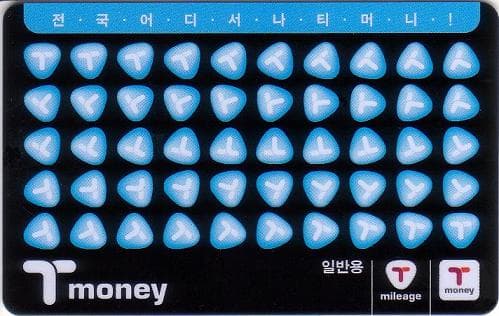
- Buy a transit card. One card covers the subway, city buses and most taxis, in every major city, and it gives you the transfer discount that cash does not. Convenience stores sell them.
- Install Naver Map or Kakao Map. Google Maps has limited walking and transit routing inside Korea, for legal reasons rather than technical ones. This catches almost every first-time visitor.
Inside a city
| Best for | Watch out for | |
|---|---|---|
| Subway | Almost everything in Seoul and Busan | Some transfers are a long walk; last trains are around midnight |
| City bus | The places the subway misses, and short hops | You must tap off as well as on, or you lose the transfer |
| Taxi | Late nights, luggage, and three or more people | Cheap by international standards; late-night surcharge applies |
| Walking | Neighbourhoods, which is where Korea is at its best | Hills. Seoul is far hillier than a map suggests |
Between cities
The rail network changed on 1 September 2026
Korea used to have two competing high-speed operators, KTX and SRT. They merged. There is now one operator, one booking app and one fare table, and fares came down about a tenth. Any guide that tells you to compare the two was written before that date.
- High-speed rail reaches most of the country from Seoul in under three hours. It is the default for long distances.
- Express buses go where the trains do not, cost less, and are far more comfortable than the word “bus” suggests — reclining seats, three across.
- Domestic flights make sense only for Jeju. City centre to city centre, the train beats the plane everywhere on the mainland.
- Intercity buses leave from bus terminals, which are usually separate from train stations and sometimes on the other side of town.
The rules nobody tells you
- 1
Tap off on buses
On the subway you tap through a gate and cannot forget. On a bus, the second tap is on you, and skipping it costs you a full fare and the transfer discount.
- 2
Transfers are free within about half an hour
Bus to subway, subway to bus, bus to bus. You pay by total distance rather than by the number of vehicles, but only with a card.
- 3
Exit numbers are the address
Koreans give directions as “exit 6, then left”. The numbering is reliable and consistent, and using it is faster than any map.
- 4
Ask for the destination in Korean script
In a taxi, showing the name on your phone in Korean removes every pronunciation problem at once. Both Korean map apps let you share a place directly.
Airports
Incheon serves most international arrivals and is about an hour from central Seoul: a non-stop express train, a cheaper all-stop train, or an airport limousine bus that stops at hotel districts. Gimpo is closer to the city and handles domestic flights and some short-haul routes. They are separate airports and a connection between them is a journey in itself.
Late night is the one weak spot
The subway stops around midnight and the last train is earlier than people expect on the outer stretches. After that it is night buses, which are infrequent, or a taxi, which is affordable but subject to a late-night surcharge and hard to hail at closing time in nightlife districts.
What it costs
By the standards of most countries visitors come from, Korean transport is inexpensive: a subway ride is small change, a cross-city taxi is the price of a sandwich elsewhere, and the fast train the length of the country costs less than a short domestic flight in Europe. Budgeting is rarely the constraint. Time is.
+Do I need a rail pass?
Only if you are taking three or more long-distance trains in a few days. For a single return journey, ordinary tickets are cheaper — more so since the September fare cut.
+Can I use my phone to pay?
Contactless from foreign banks is still not accepted at most subway gates. The physical transit card remains the reliable option.
+Is it safe at night?
Korea is one of the safer countries for public transport at night. The practical night-time problem is availability, not safety.
+What about renting a car?
Rarely worth it for a city trip and often a liability — parking is hard and expensive. It earns its keep on Jeju and in rural areas where buses are infrequent.
Read next
T-money or Climate Card? Most Visitors Should Buy the Boring One
Seoul sells several transit passes and the cheapest-looking one has a rule that strands you at the airport. Here is the arithmetic, and which card actually fits your trip.
Google Maps Still Cannot Navigate Korea — What Changed in 2026, and What to Install
Korea approved Google's map export in February 2026, ending a 19-year dispute. Turn-by-turn navigation still is not live. Here is what works today and the two apps that do.
KTX vs SRT: The Answer Changed in September 2026
SRT no longer exists. It was merged into Korail on 1 September 2026, fares came down about ten per cent, and the two booking apps became one. Here is what that changes.
How to Ride a Korean City Bus
Buses reach the places the subway does not, and visitors avoid them for one reason: nobody explains the tap-off rule. Here is the whole procedure.