Where to Eat in Seoul After Midnight
Seoul does not close, but what is open changes character by the hour. Here is what is still serving at one, at three, and at five in the morning.
Reality check
- Booking
- Not needed
- English menu
- Photos only
- Going alone
- Perfectly normal
- Payment
- Card accepted
One of the genuinely distinctive things about Seoul is that being hungry at two in the morning is not a problem to be solved. It is an ordinary situation with ordinary options. What changes through the night is not whether food is available but which kind.
By the hour
| Time | What is open | Where |
|---|---|---|
| Until about midnight | Most restaurants, and the subway | Everywhere |
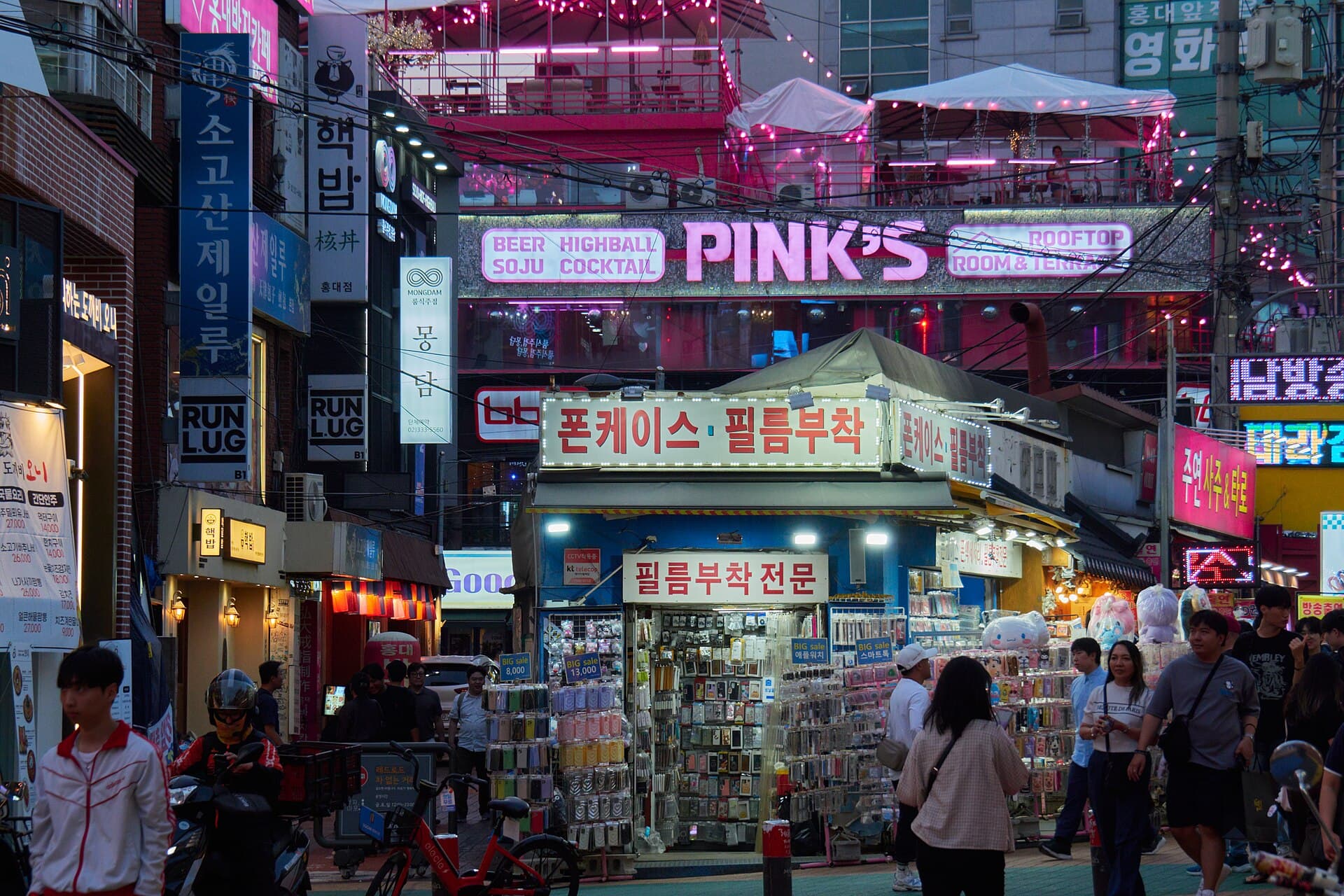
| Midnight to two | Chicken-and-beer houses, grill restaurants, street tents | Nightlife districts |
| Two to four | 24-hour chains, noodle and stew restaurants, convenience stores | Thinner, but present in any busy area |
| Four to six | Hangover-soup restaurants, early markets | Near markets and older neighbourhoods |
The subway is the constraint, not the food
Trains stop around midnight and the last one on the outer stretches is earlier than people expect. From then until roughly half past five you are relying on night buses, which are infrequent, or a taxi. Decide how you are getting back before you decide where to eat.
What to eat at that hour
- Hangover soup. A whole restaurant category that exists for this exact moment, often open around the clock, and genuinely good food rather than a novelty.
- Chicken and beer. The default late-night meal in Korea. Shared, so better with company.
- Knife-cut noodles or a stew at a 24-hour chain. Reliable, cheap, single-portion.
- Street tents. Seasonal and weather-dependent, cash-friendly, and the closest thing to a Korean late-night institution.
- The convenience store. Heated at the counter, eaten at the window bar. Nobody thinks this is sad here.
Follow the signage, not a list
Restaurant turnover in Seoul is fast enough that any specific late-night recommendation ages badly. What does not age: a lit sign at three in the morning means open, and a busy room at that hour means the food is fine. Both Korean map apps let you filter by what is open now, which beats any list.
Where to be
- Hongdae, for the widest choice and the youngest crowd. Busy until dawn on weekends.
- Jongno and Euljiro, for older-style restaurants, street tents and hangover soup.
- Gangnam, for late chains and the highest concentration of taxis when you want to leave.
- Whatever neighbourhood you are staying in. There is a 24-hour convenience store within a few minutes of almost anywhere in Seoul.
+Is it safe to walk around at that hour?
Seoul is unusually safe at night by international standards, and busy areas stay busy. Ordinary caution around drunk crowds at closing time still applies.
+Can I get a taxi easily?
Between one and three on a weekend in a nightlife district, it can take a while — that is the peak demand of the week. Walking a few streets away from the busiest corner usually helps.
+Is delivery an option?
Delivery apps generally require a Korean phone number and address, so for most short-term visitors, no.
Courses in this guide
Read next
Getting Home After the Last Subway in Seoul
Seoul's subway stops around midnight and the taxi queue right after is the worst of the night. Here is the timing that actually decides how your evening ends.
Korean Convenience Stores: What to Buy and How to Heat It
The convenience store is a real meal option in Korea, not a last resort. What is worth buying, and how to use the microwave and hot water bar without hesitating.