Taking a Taxi in Korea Without Speaking Korean
Kakao T runs the taxi market and its verification step blocks visitors without a Korean number. Here is what works instead, and how to hail one on the street.
Reality check
- English menu
- Photos only
- Payment
- Card or cash — taxis take cards and transit cards; some drivers still prefer cash for very short rides
Korea does not have Uber in the form you know it. Kakao T is the app almost everyone uses, and it is genuinely good — but the sign-up asks to verify a Korean phone number, which most visitors do not have.
That leaves three routes, and the first one is the one most visitors overlook.
1. Just raise your hand
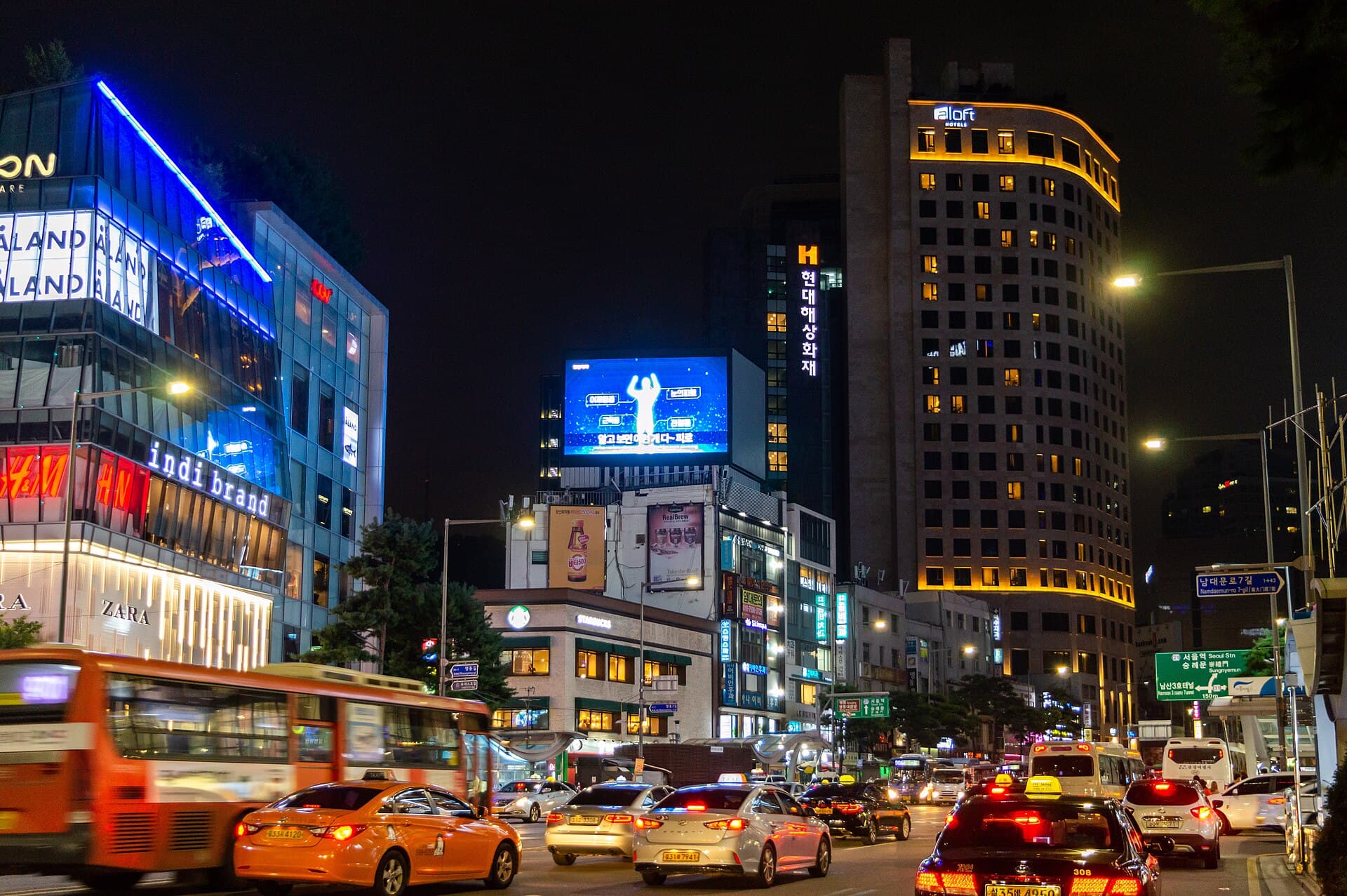
Street hailing is normal, legal, and in central Seoul usually faster than waiting for an app match. A taxi with a lit sign in the windscreen is free. Get in the back, and show the driver your destination — on a map, in Korean text, or as a screenshot. Do not read the address aloud from a romanised spelling; the pronunciation gap causes more confusion than silence does.
The most useful thing you can do before leaving the hotel
Screenshot your destination in Korean from Naver Map. A driver reads it in one glance. This single habit removes almost every taxi communication problem in Korea.
2. Use the app that does not fight you
If you have a Korean number from a physical SIM, install Kakao T and use it normally — it has an English interface and you can set the destination without speaking. If you do not have a Korean number, look for the international-facing taxi apps aimed at visitors; several partner with the same fleets and accept a foreign number and card.
This is the practical argument for buying a physical SIM rather than a data-only eSIM. One app, used daily for a week, often justifies the price difference on its own.
3. Ask your hotel to call one
Underrated and completely reliable. Front desks call taxis all day and will tell the driver where you are going. For an early airport run or a late return, this is the least stressful option available.
What a ride is actually like
- Meters are used and honest. Fare disputes are rare in Korea compared with many countries.
- Late at night fares carry a surcharge, and in nightlife districts around closing time demand outstrips supply badly. Plan to leave before or well after the rush.
- Cards work in almost every taxi, and your transit card works too — tap it on the same reader you use on the subway.
- Seatbelts in the back are expected.
- Tipping is not a thing. Do not leave the change; it confuses people.
Airport taxis
From Incheon into Seoul a taxi is expensive and slower than the train in traffic. Take the airport railway or a limousine bus in, and save taxis for short hops inside the city.
+Are there black deluxe taxis?
Yes, larger black cars with a higher fare. They are more comfortable and more expensive. Ordinary taxis are fine for almost everything.
+Can I pay with my foreign credit card?
Usually, but not always. Carry enough cash for one ride as a fallback, especially outside big cities.
Courses in this guide

Read next
Google Maps Still Cannot Navigate Korea — What Changed in 2026, and What to Install
Korea approved Google's map export in February 2026, ending a 19-year dispute. Turn-by-turn navigation still is not live. Here is what works today and the two apps that do.
Korea SIM or eSIM: The Question Is Whether You Need a Korean Number
Most guides compare data allowances. The decision that actually matters is whether you need a Korean phone number, because that is what unlocks reservations, taxis and delivery.